I wanted to share some good news with everyone. My good friend Prof. Nicholas Denysenko, professor of theology at Loyola Marymount University in California has a new book coming out in 2017 called Theology and Form: Contemporary Orthodox Architecture in America (South Bend, IN: The University of Notre Dame Press, 2017).
I look forward to reading the book and so should you! Check back later next year for ore information.
To read a synopsis of this book click here
Thursday, October 27, 2016
Monday, October 17, 2016
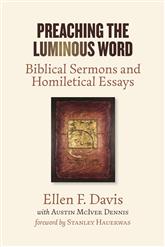
Book Review Preaching the Luminous Word
Preaching is not an easy task. Trust me, as someone who has preached Sunday after Sunday, week in and week out for sixteen years I can attest: preaching is hard work. Why is it so hard? Well for starters as soon as you finish one sermon you have to begin another one. It's also difficult to preach an authentic inspirational and Biblical sermon that sounds fresh and new each week. I must say I do envy larger congregations that have a head pastor and maybe an associate or two which means that one could rotate sermon assignments, do I wish I could preach every other week rather than every week! But alas, pastors rise to the occasion and crack open their Bibles and lectionary notes for the following week and get started once again.
Preaching can be both life-giving and light giving at the same time as the preacher provides fresh insight and words about the Word made flesh. Preaching also can provide light and direction in a world that can often be full of darkness. Ellen Davis, who serves as the Amos Ragan Kearns Professor of Bible and Practical Theology at Duke Divinity School, has published a collection of Biblical sermons and homiletical essays that provide both life and light to the preached word. I have come across Prof. Davis' name before, but never had the opportunity to read any of her work or hear her preach. I was both pleased and inspired by this sermon collection and now wish that I heard these sermons live.
I have read a lot of sermons in my life but Prof. Davis' sermons are some of the best. I found that she has a razor sharp eye on the text and both keeps the reader's attention and focus on the task at hand. Many pastors fall into the trap of including everything in their sermons; details, too many quotes from other sources, and one too many stories. Davis keeps her focus on the Biblical text and therefore keeps her readers or hearers attention on the Biblical text as well. She states in the preface that she enjoys preaching on Proverbs and the Psalms which is also quite unique since many pastors, including myself, feel more comfortable in a narrative section of Scripture, for examples the many stories in 1-2 Kings for or one of the gospel parables.
Another bonus of this sermon collection are the four homiletical essays that are included:
Witnessing to God in the Midst of Life: Old Testament Preaching
Holy Preaching: Ethical Interpretation and the Practical Imagination
Surprised by Wisdom: Preaching Proverbs
"Here I Am": Preaching Isaiah as a Book of Vocation
Each of these essays provides much food for thought regarding the craft of preaching. I certainly will read and re-read these essays again as food for my heart, mind, and soul as I continue my own preaching and teaching vocation.
If you are interested in a preacher's preacher and want some good sermons to read and reflect on than pick up a copy of Preaching the Luminous Word, you won't be disappointed.
For more information about this book click here
Preaching can be both life-giving and light giving at the same time as the preacher provides fresh insight and words about the Word made flesh. Preaching also can provide light and direction in a world that can often be full of darkness. Ellen Davis, who serves as the Amos Ragan Kearns Professor of Bible and Practical Theology at Duke Divinity School, has published a collection of Biblical sermons and homiletical essays that provide both life and light to the preached word. I have come across Prof. Davis' name before, but never had the opportunity to read any of her work or hear her preach. I was both pleased and inspired by this sermon collection and now wish that I heard these sermons live.
I have read a lot of sermons in my life but Prof. Davis' sermons are some of the best. I found that she has a razor sharp eye on the text and both keeps the reader's attention and focus on the task at hand. Many pastors fall into the trap of including everything in their sermons; details, too many quotes from other sources, and one too many stories. Davis keeps her focus on the Biblical text and therefore keeps her readers or hearers attention on the Biblical text as well. She states in the preface that she enjoys preaching on Proverbs and the Psalms which is also quite unique since many pastors, including myself, feel more comfortable in a narrative section of Scripture, for examples the many stories in 1-2 Kings for or one of the gospel parables.
Another bonus of this sermon collection are the four homiletical essays that are included:
Witnessing to God in the Midst of Life: Old Testament Preaching
Holy Preaching: Ethical Interpretation and the Practical Imagination
Surprised by Wisdom: Preaching Proverbs
"Here I Am": Preaching Isaiah as a Book of Vocation
Each of these essays provides much food for thought regarding the craft of preaching. I certainly will read and re-read these essays again as food for my heart, mind, and soul as I continue my own preaching and teaching vocation.
If you are interested in a preacher's preacher and want some good sermons to read and reflect on than pick up a copy of Preaching the Luminous Word, you won't be disappointed.
For more information about this book click here
Friday, October 7, 2016
New Book Published
I wanted to share the good news that a wonderful new book has been published: The Church Has Left the Building: Faith, Parish, and Ministry in the 21st Century (Eugene, OR: Cascade Books, 2016). Edited by my longtime friend and colleague Michael Plekon together with Maria Gwyn McDowell and Elizabeth Schroeder this diverse and important collection of essays calls into question the roles and structures of parish and congregational life. However, the essays also investigate the intersection of faith and life, ministry and world too.
I don't want to give too much away, but trust me, if you are a pastor or a lay leader who is vaguely interested in parish life go and buy a copy of this book, buy one for yourself, for your pastor, for your friends! You won't be disappointed. I also have an essay in the book too!
For more information about The Church Has Left The Building click here
I don't want to give too much away, but trust me, if you are a pastor or a lay leader who is vaguely interested in parish life go and buy a copy of this book, buy one for yourself, for your pastor, for your friends! You won't be disappointed. I also have an essay in the book too!
For more information about The Church Has Left The Building click here
Wednesday, October 5, 2016
Book Review The Eloquence of Grace
I never heard of Joseph Sittler before reading this book. I came across his name online somewhere and decided to read up more about him. I'm glad I did! This new book, edited by James Childs Jr and Richard Lischer with a Foreward by Martin Marty (Eugene, OR: Cascade Books, 2012) is a collection of essays and sermons from the famous Lutheran pastor and theologian Joseph Sittler. I included a link to Sittler's Archives below so you can read more about him under the "biography section." Sittler was active in the mid part of the 20th century as a pastor and as a teacher at various seminaries. He lived through the depression, through World War II, the Korean War, Vietnam, and died in the 1980's. The son of a Lutheran pastor himself, Sittler was well versed in ecclesial life from the ground up. He knew the ups and downs, the good and the bad, of parish life. His first parish was a small tiny country parish so he knew "the salt of the earth people" very well.
While the essays are written a long time ago they seem fresh and timeless. Settler's meta-narrative is God's grace towards creation focusing on the integration and interdependence of the creation and humans, between humanity and ecology, and between God and humankind.
From what I learned from this book is that Sittler was a preacher's preacher as they say, bringing the best of Biblical criticism, exegesis, and knowledge into the pulpit, bridging the pulpit and the pew, the altar and the world together. His sermons are deeply pastoral bringing the best of the gospel to his hearers. This is not an easy task since many theologians have a hard time speaking to the Average Joe or Jane Doe and some pastors have a hard time explaining the Bible in words and phrases which are understandable.
I am glad that I have been introduced to Joseph Sittler and wish I knew about him years ago. The Eloquence of Grace is a book that I will return to again as a breath of fresh air as I continue my own preaching and teaching ministry.
For more information about The Eloquence of Grace click here
For more information about Joseph Sittler click here
While the essays are written a long time ago they seem fresh and timeless. Settler's meta-narrative is God's grace towards creation focusing on the integration and interdependence of the creation and humans, between humanity and ecology, and between God and humankind.
From what I learned from this book is that Sittler was a preacher's preacher as they say, bringing the best of Biblical criticism, exegesis, and knowledge into the pulpit, bridging the pulpit and the pew, the altar and the world together. His sermons are deeply pastoral bringing the best of the gospel to his hearers. This is not an easy task since many theologians have a hard time speaking to the Average Joe or Jane Doe and some pastors have a hard time explaining the Bible in words and phrases which are understandable.
I am glad that I have been introduced to Joseph Sittler and wish I knew about him years ago. The Eloquence of Grace is a book that I will return to again as a breath of fresh air as I continue my own preaching and teaching ministry.
For more information about The Eloquence of Grace click here
For more information about Joseph Sittler click here
Tuesday, September 27, 2016
Book Review: Questions Preachers Ask Essays in Honor of Thomas G. Long
Several years ago I attended the Elevating Preaching Conference hosted by Wake Forest Divinity School. It was a day of worship, teaching, and preaching. Among the preachers that day was Rev. Dr. Thomas Long. I had read a few articles by Long in the Christian Century but never heard him preach. I cannot remember exactly what he said during the sermon but his poise and his presence in the pulpit was memorable. I do recall that not only did he preach the Word but he performed it. His word choices, delivery, and sense of humor and irony was of that of a "preachers preacher." Tom Long is one of the best and what a better way to honor him at his retirement than to publish a selection of essays by other well known preachers about the current state of preaching.
The volume of essays is titled: Questions Preachers Ask: Essays in Honor of Thomas G. Long edited by Scott Black Johnston, Ted A. Smith, and Lenora Tubbs Tisdale (Louisville, KY: John Knox Press, 2016).
If you want to learn more about the current state of preaching than look no further than this book. The book is divided into five major sections:
Bible
Theology
Changing Congregational Contexts
Church and Culture
Hopeful Signs
The eleven chapters are organized around specific questions that have been asked of preachers today. Of all the essays I enjoyed the third section the most: Changing Congregational Contexts.
This section was the most interesting I think because the Church today, and all aspects of Church life today, are going through monumental shifts: lover Sunday attendance, decrease of financial offerings, shifting trends in full time ministry, differing expectations of parish life from older generations and millennials, changing the way we train and form future pastors, the list goes on and one. Then of course there is the rise of the "Nones" as the recent Pew Research report has stated, the rise of people who say that they have no religious affiliation at all. Richard Lischer's contribution, Prophesy to the Bones was a very insightful essay: what do you say to a parish and Church body that is indeed dying, yet it too needs to hear the Word of God? How do you preach to a congregational that sees the writing not the wall but is not completely dead yet? How do you preach the Good News to a parish who only has Bad News? I think a lot of pastors would benefit from this chapter alone!
Actually ALL preachers would benefit from reading Questions Preachers Ask. Even a well seasoned pastor who has preached for a long time needs to hear the Word of God fresh again and what a better way than to read a wonderful inspirational collection of sermons from some top notch practitioners in the field? Actually, one should not just read Questions Preachers Ask but also return to the writings of Rev. Tom Long. His magnum opus, Witness to Preaching is now in its 3rd edition, perhaps you can re-read that one again? Or maybe turn to his other books and articles in order to get some fresh words about The Word again? I know I do.
While I never had Rev. Long as a teacher and only heard him preach one time I want to re-read his books as a way to learn how I can preach better, preach deeper, and preach more truthfully and honestly. I commend the editors and Westminster John Knox press for publishing such a volume. Kudos!
For more information about Questions Preachers Ask click here
For more information about Rev. Tom Long click here
The volume of essays is titled: Questions Preachers Ask: Essays in Honor of Thomas G. Long edited by Scott Black Johnston, Ted A. Smith, and Lenora Tubbs Tisdale (Louisville, KY: John Knox Press, 2016).
If you want to learn more about the current state of preaching than look no further than this book. The book is divided into five major sections:
Bible
Theology
Changing Congregational Contexts
Church and Culture
Hopeful Signs
The eleven chapters are organized around specific questions that have been asked of preachers today. Of all the essays I enjoyed the third section the most: Changing Congregational Contexts.
This section was the most interesting I think because the Church today, and all aspects of Church life today, are going through monumental shifts: lover Sunday attendance, decrease of financial offerings, shifting trends in full time ministry, differing expectations of parish life from older generations and millennials, changing the way we train and form future pastors, the list goes on and one. Then of course there is the rise of the "Nones" as the recent Pew Research report has stated, the rise of people who say that they have no religious affiliation at all. Richard Lischer's contribution, Prophesy to the Bones was a very insightful essay: what do you say to a parish and Church body that is indeed dying, yet it too needs to hear the Word of God? How do you preach to a congregational that sees the writing not the wall but is not completely dead yet? How do you preach the Good News to a parish who only has Bad News? I think a lot of pastors would benefit from this chapter alone!
Actually ALL preachers would benefit from reading Questions Preachers Ask. Even a well seasoned pastor who has preached for a long time needs to hear the Word of God fresh again and what a better way than to read a wonderful inspirational collection of sermons from some top notch practitioners in the field? Actually, one should not just read Questions Preachers Ask but also return to the writings of Rev. Tom Long. His magnum opus, Witness to Preaching is now in its 3rd edition, perhaps you can re-read that one again? Or maybe turn to his other books and articles in order to get some fresh words about The Word again? I know I do.
While I never had Rev. Long as a teacher and only heard him preach one time I want to re-read his books as a way to learn how I can preach better, preach deeper, and preach more truthfully and honestly. I commend the editors and Westminster John Knox press for publishing such a volume. Kudos!
For more information about Questions Preachers Ask click here
For more information about Rev. Tom Long click here
Thursday, September 22, 2016
Book Review: Preaching Gospel Essays in Honor of Richard Lischer
When I saw that Cascade Books recently published a volume of essays in honor of the Duke Divinity School's Professor of Homiletics, Richard Lischer, I knew that I had to read it. I was first introduced to Lischer's writings several years ago by a colleague who told me that I just had to read his books. I devoured his memoir Open Secrets: A Memoir of Faith and Discovery (Harmony Publishing, 2002) which recalls his time as a Lutheran pastor in a small town. Lischer is a preacher's preacher, teaching preaching and homiletics at Duke for 37 years. He will be retiring at the end of the Spring 2017 semester.
This volume of essays is a tribute to Prof. Lischer's long and industrious career. The seventeen essays are from former students and colleagues as well as from a diverse Christian spectrum. Each touch on an important aspect of the proclaimed word, and highlight Prof. Lischer's contribution to the field of homiletics. This is not a dry academic assortment of essays which one often finds in volumes such as these. Some of the essays such as Profs. Stanley Hauerwas and Ellen Davis include not just an essay but sermons as well. As I was reading I thought what a wonderful way to honor a professor of homiletics than by including a few sermons too!
The essays include a wide variety of topics: preaching the Old Testament, social justice and the gospel, the gospel and spirituals, the gospel in the public arena, as well as others.
While some books of essays are arranged topically, this one is not, it would be very hard to do so, given the wide variety and range. Yet they all do share a common thread; every Sunday human preachers with human words help make the Word real and alive for people in the pews, and we do this Sunday after Sunday, year after year, season after season, and it's hard work. However, this work, according to Richard Lischer is not a burden, but a blessing, since we know in the Gospel of John that the Word became flesh and dwelt among us full of grace and truth. After reading Preaching Gospel I have a lot of gratitude for Prof. Lischer and all of his labors. I never heard Richard Lischer preach in person nor did I have him as a teacher, but I do know that after reading this volume of essays, as well as his own writings and sermons, that I have gained a lot for doing so, and for this I am grateful.
I congratulate the editors who put together this volume of essays and I commend and congratulate Prof. Lischer for his long teaching career. It has born fruit and we are all grateful for that.
For more information about Preaching Gospel: Essays in Honor of Richard Lischer click here
Friday, April 22, 2016
Book Review: Church Refugees
It's unfortunate, but it happens. It happens all too often. It happens right under our watch. It happens right in front of us but we usually don't notice, or deny that it's happening, but it does. People. Leave. Church. Yes, that is right, folks leave the pews. Sometimes they leave to start a new mission nearby or perhaps a new form of ministry, but people are leaving parishes and congregations. We can deny it but a sociology of religion professor colleague of mine always reminds me that data doesn't lie.
Josh Packard, together with his research assistant Ashleigh Hope have written a short but very good book on the "Dones" as they call them, folks who are done with Church. This is a play on the recent Pew Religion report that speak about the new wave of Millennials and Gen-X'ers who say that they have no religious affiliation. The media have labeled them the "Nones."
Dr. Packard is a professor of sociology at the University of Northern Colorado and co-director of the Social Research Lab. Ms. Hope is a graduate student at Vanderbilt University and one of Dr. Packard's former students.
Packard and Hope focus their attention on the Dones, the people who were once very faithful, very generous with their time, talent, and treasure, but as the word says, are "done" with Church. At least done with the institutional Church. These are the folks who attended prayer meetings and Bible studies, folks who volunteered for committees and worked with youth groups, but for numerous reasons are done with their local parishes and congregations and done with the institutional Church. These are not overly angry people are bitter, but they are tired of either being yelled at, scolded, or cajoled by clergy and lay leaders. They are tired of giving endlessly yet not being appreciated or affirmed. I guess many of these people are burned out on Church, at least with some aspects of Church life.
A short book review cannot delve into the numerous details which this book provides. However every pastor in ministry needs to read this book since it highlights many reasons why folks leave. Some of which are:
1. Not being valued by their pastors and lay leaders.
2. Being scolded about their Church attendance or lack of giving (One person said that they were even called up years after they left their congregation and the Church was soliciting a donation from them!!!)
3. Being overworked
4. Not being listened to
5. Being scolded and judged
There are more reasons too, but these are the basic ones.
While reading this book I felt sad, sad for those who left, sad of the good things that could have been done if these people stayed.
One would hope that both pastors and lay leaders, seminary faculty and national Church boards could read Church Refugees and learn something. We cannot fix everything that is broken, so much which is broken is systemic to institutional life in general, but we can, take a few helpful hints from Church Refugees and at least be a place of generosity and welcome, a place where folks can find the balm of Gilead and find both holiness and wholeness.
I congratulate Dr. Packard and Ms. Hope for conducting this research and for writing such a fine book. I hope clergy will read it and take heed. There are still folks in our pews and parishes who maybe are on their way to being done with Church, but their not done yet, at least not for now.
For more information about Church Refugees click here
Josh Packard, together with his research assistant Ashleigh Hope have written a short but very good book on the "Dones" as they call them, folks who are done with Church. This is a play on the recent Pew Religion report that speak about the new wave of Millennials and Gen-X'ers who say that they have no religious affiliation. The media have labeled them the "Nones."
Dr. Packard is a professor of sociology at the University of Northern Colorado and co-director of the Social Research Lab. Ms. Hope is a graduate student at Vanderbilt University and one of Dr. Packard's former students.
Packard and Hope focus their attention on the Dones, the people who were once very faithful, very generous with their time, talent, and treasure, but as the word says, are "done" with Church. At least done with the institutional Church. These are the folks who attended prayer meetings and Bible studies, folks who volunteered for committees and worked with youth groups, but for numerous reasons are done with their local parishes and congregations and done with the institutional Church. These are not overly angry people are bitter, but they are tired of either being yelled at, scolded, or cajoled by clergy and lay leaders. They are tired of giving endlessly yet not being appreciated or affirmed. I guess many of these people are burned out on Church, at least with some aspects of Church life.
A short book review cannot delve into the numerous details which this book provides. However every pastor in ministry needs to read this book since it highlights many reasons why folks leave. Some of which are:
1. Not being valued by their pastors and lay leaders.
2. Being scolded about their Church attendance or lack of giving (One person said that they were even called up years after they left their congregation and the Church was soliciting a donation from them!!!)
3. Being overworked
4. Not being listened to
5. Being scolded and judged
There are more reasons too, but these are the basic ones.
While reading this book I felt sad, sad for those who left, sad of the good things that could have been done if these people stayed.
One would hope that both pastors and lay leaders, seminary faculty and national Church boards could read Church Refugees and learn something. We cannot fix everything that is broken, so much which is broken is systemic to institutional life in general, but we can, take a few helpful hints from Church Refugees and at least be a place of generosity and welcome, a place where folks can find the balm of Gilead and find both holiness and wholeness.
I congratulate Dr. Packard and Ms. Hope for conducting this research and for writing such a fine book. I hope clergy will read it and take heed. There are still folks in our pews and parishes who maybe are on their way to being done with Church, but their not done yet, at least not for now.
For more information about Church Refugees click here
Subscribe to:
Posts (Atom)